
Content
A fade haircut is a clipped haircut in which the hair is graduated from a longer length on top to much shorter lengths on the sides and back, with the shortest point reaching the skin or close to it. The defining feature is the blend: instead of visible steps, the hair transitions smoothly through every intermediate length. If you want a clean, sharp profile with no hard lines, a fade is the most reliable way to get it.
That definition covers a lot of ground, because a fade is not one fixed style. It is a technique that can be applied with different fade heights, different top lengths, and different degrees of contrast. Understanding what a fade haircut actually is, and how barbers create it, helps you describe what you want with a clipper guard, avoid the usual miscommunication in the chair, and choose the right equipment if you are cutting hair professionally.
A fade is defined by three parameters: the length left on top, the height of the fade line, and the length at the skin. The top keeps most of its length. Below the fade line, the barber reduces length in small increments until, at the very bottom, the hair is either skin-bare or very close to it. That short-to-long transition is what separates a fade from a regular side trim.
The work itself is done mostly with clippers. A barber starts with a larger guard, sets the length at the fade line, then switches to progressively smaller guards while opening and closing the blade lever. The lever moves the blade between open and closed positions, which changes the cutting length by roughly one guard step without changing the guard itself. Combined with freehand blending, this is what makes a fade look like one continuous gradient rather than stacked horizontal stripes.
Fades are most common on the sides and back of the head, but they can be extended into the temporal area and the nape for a more aggressive shape. The neckline finish, whether rounded, square, or natural, is a separate decision and changes how the fade reads from behind.
The vocabulary of a fade runs on clipper guard numbers. Knowing the approximate lengths behind those numbers is the fastest way to communicate with a barber and to evaluate the finished result.
| Guard | Resulting length | Typical role in a fade |
|---|---|---|
| 0 (no guard) | Skin, roughly 0.4 mm | Bottom of skin fades, final step |
| 0.5 | About 1.5 mm (1/16 in) | Blurring the hairline without fully exposing the skin |
| 1 | About 3 mm (1/8 in) | Common lowest step above a trimmer line |
| 1.5 | About 4.5 mm (3/16 in) | Transition zone between guard 1 and guard 2 |
| 2 | About 6 mm (1/4 in) | Body of low and mid fades |
| 3 | About 9 mm (3/8 in) | Upper zone of mid fades |
| 4 | About 13 mm (1/2 in) | High fades and longer side blends |
Exact lengths vary by blade manufacturer and by lever position, so treat these numbers as reference values. What matters is that the distance between each step is small enough to be removed by freehand blending.
Professional fade work depends on a clipper that holds a consistent blade adjustment. If the blade drifts during a session, the blend develops soft spots that have to be corrected, and correcting a fade usually means cutting more hair off than planned. Fade-specific clippers therefore emphasize blade rigidity, adjustable blades, and quiet operation so the barber can work close to the ear without irritation.
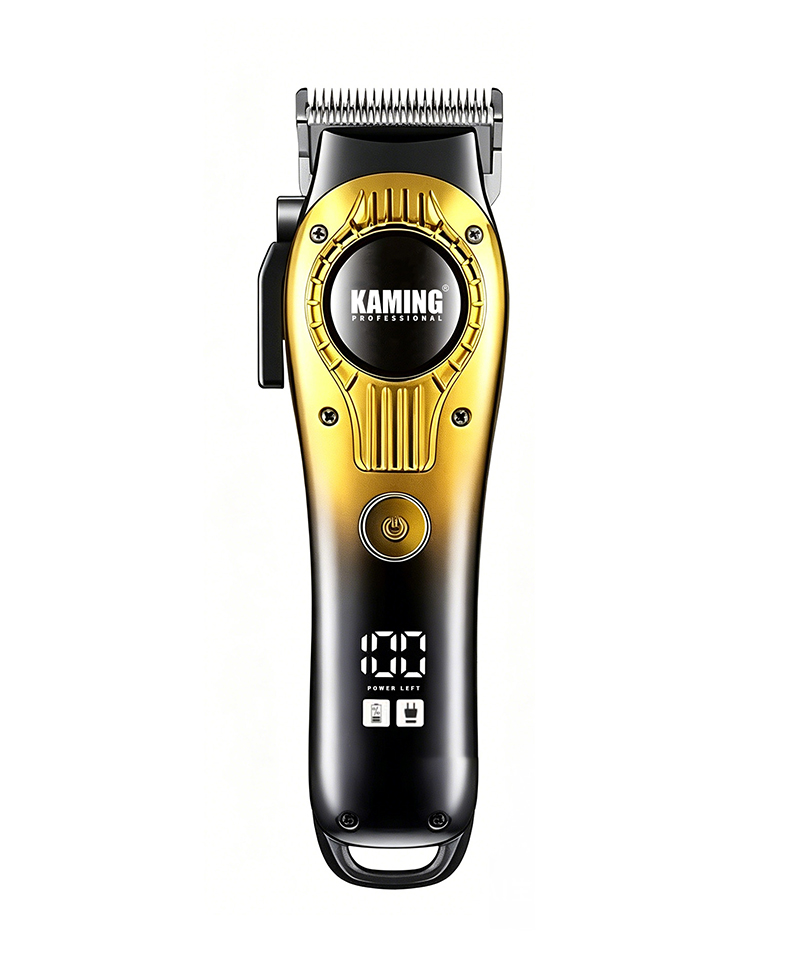 OEM/ODM Kaming 1708 Quiet Electric Hair Clipper, Professional Fade Clipper for Salon Use wHome Products Hair Clipper Kaming 1708 Quiet Electric Hair Clipper, Professional Fade Clipper for Salon Use with Digital DisplayView Product →
For barbers and home users who want a salon-finished blend, a clipper with an adjustable blade and a stable motor makes the freehand part of the fade far easier to control.
Once you understand the technique, the next step is choosing where the fade line sits. The same fade haircut can look completely different depending on how high on the head the gradient starts.
An undercut fade is a separate combination: the top is left long and disconnected while the sides and back are faded, so the contrast comes from both the length difference and the fade itself. If your top hair is swept back or styled forward, the undercut fade gives it a structured frame.
Whichever fade type you choose, a clean hairline is part of the finished look. Many barbers finish with a zero-gap trimmer to sharpen the front hairline, the sideburns, and the neckline. This stage is not part of the gradient, but it is what makes the fade look intentional.
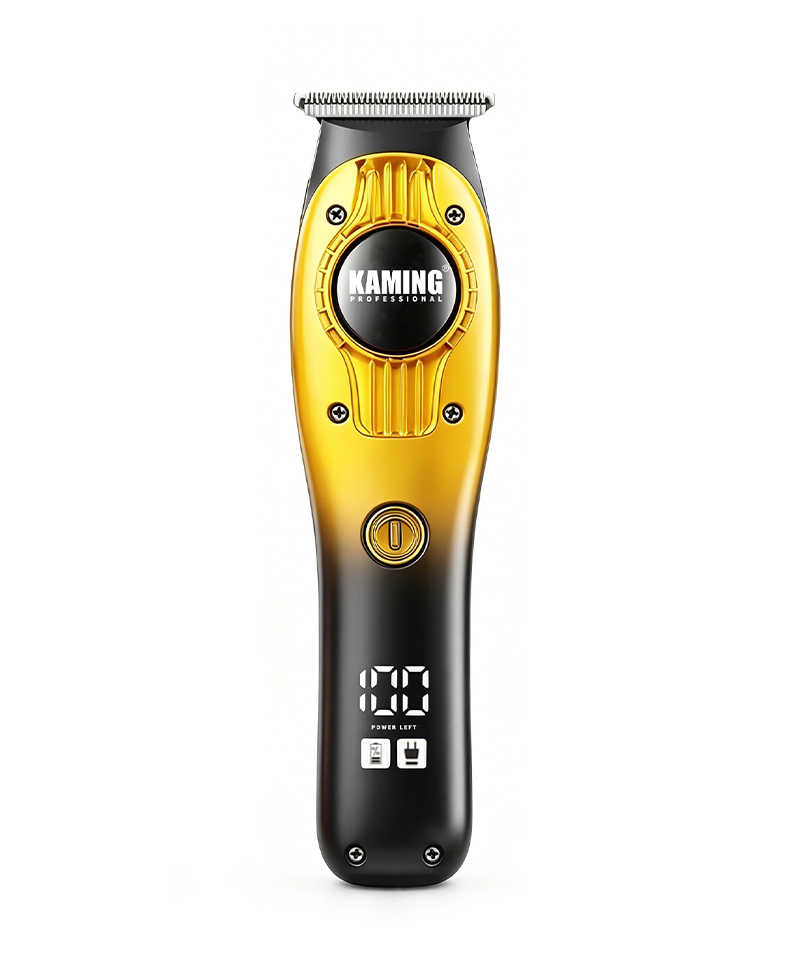 OEM/ODM Kaming 1710 Professional Zero Gap Digital Display Carving Hair TrimmerHome Products Hair Trimmer Kaming 1710 Professional Zero Gap Digital Display Carving Hair TrimmerView Product →
A precision trimmer with zero-gap blades removes the soft edge that a clipper leaves behind, giving the final outline a crisp, defined finish.
The most common point of confusion is the difference between a fade and a taper. Both shorten the hair progressively, but they are not interchangeable. A taper is a subtle graduation that usually stays within a limited length range, for example from a number 3 at the top of the sides down to a number 1 at the edge. It softens the outline without exposing the skin. A fade goes much shorter, usually to the skin or close to it, and that makes the contrast deliberate instead of understated.
| Feature | Taper | Fade |
|---|---|---|
| Bottom length | Short but visible hair | Skin or near-skin |
| Contrast level | Subtle and natural | High and visible |
| Fade line | No obvious starting point | Clearly defined line |
| Upkeep | Longer between cuts | Refresh every 2–3 weeks |
| Typical use | Business cuts, neckline blending | Modern styles, undercuts, skin fades |
A taper fade combines both approaches: the neckline and the area around the ears are tapered, while a higher fade line adds contrast. This hybrid keeps the natural look of a taper near the bottom but delivers the sharpness of a fade further up the head, which is why it has become one of the most requested variations.
Barbers cannot read minds, but they can read guard numbers. If you describe a fade in concrete terms, you remove almost all the guesswork from the appointment.
A reference photo is helpful, but a photo alone is not enough. If the photo shows a high fade and you ask for a low fade, you will probably be disappointed. Pair the photo with the five points above and the barber knows exactly where to start and where to stop.
When the fade is performed with precision, the tools matter as much as the technique. Adjustable blades, low vibration, and a stable motor reduce the number of corrections during the blend. That is why professional fade clippers are designed around those basics first. Kaming builds its fade clippers and trimmers around these criteria, drawing on more than 15 years of experience in barber tool manufacturing. Barbers and brands that need a dependable supply of fade equipment can review the company's manufacturing background for more on that side of the business.
In salons, fade services are often booked every two to three weeks, so barbers tend to favor tools that deliver consistent results across a full day of appointments. Adjustable blades, dependable battery life, and clear feedback on the tool itself reduce downtime and remove guesswork between clients.
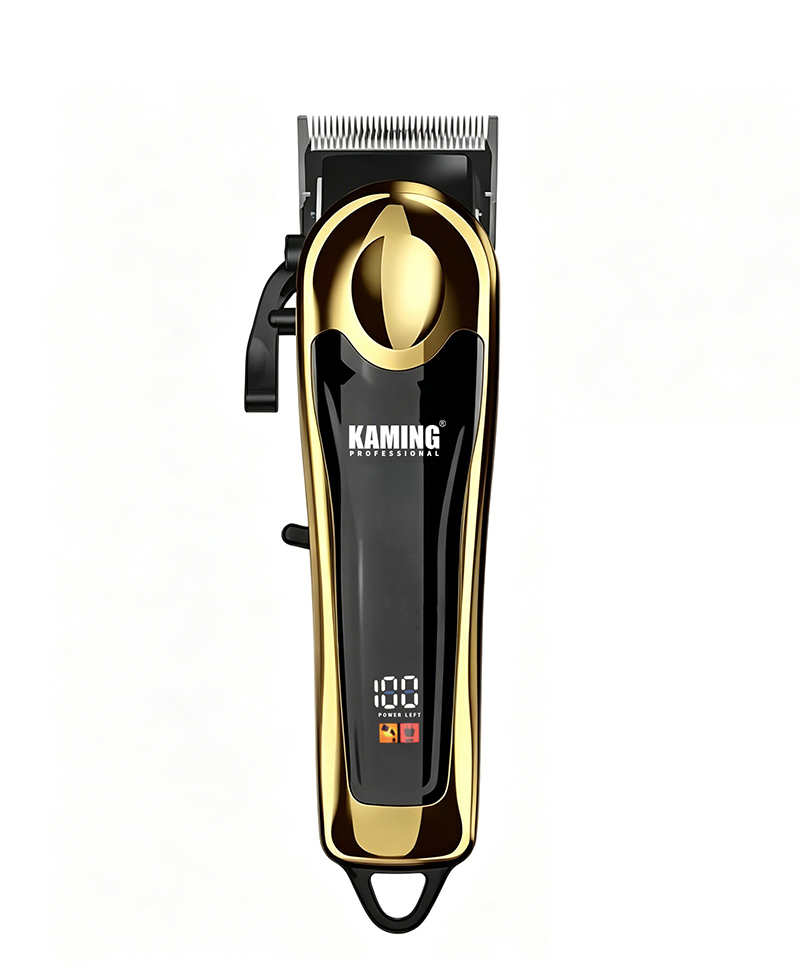 OEM/ODM Kaming Professional Adjustable LCD Display Fade Hair Clipper for SalonsHome Products Hair Clipper Kaming Professional Adjustable LCD Display Fade Hair Clipper for SalonsView Product →
An adjustable fade clipper with a digital display gives the barber a quick read on the selected speed and the remaining runtime, which is exactly the kind of detail that matters during a busy chair rotation.
A fade haircut is a graduated cut that blends from a longer top down to very short or bare sides and back. The types are defined by the height of the fade line: low, mid, high, drop, and skin. The principle is always the same — small reductions in length, controlled blade work, and careful blending — which is why the quality of the clipper has such a direct impact on the final result.
Before you sit in the chair, decide where the fade line starts, how short the bottom should be, and how the neckline should finish. If you are cutting hair professionally, keep your tools properly adjusted and clean. Blade oil and regular inspection preserve the fade line and keep the clipper comfortable against the scalp; the normal maintenance requirements for hair clippers are simple, but skipping them shows up directly in the quality of the next fade.













 English
 中文简体
中文简体 русский
 Español
 Português
 عربى
عربى

