
Content
If you have ever picked up a clipper set and wondered which guard leaves a quarter inch of hair, the answer is printed on the guard itself: a #2 guard cuts to 1/4 inch, or about 6 mm. Every clipper guard number maps to a fixed length, and once you learn the scale from #0 to #8, you can plan a fade, a taper, or a simple all-over trim before the clipper touches the head. This guide explains what each guard size means in inches and millimeters, how the taper lever changes the effective length, and how to pick the right guards for common haircut styles.
Clipper guard numbers exist to standardize cutting length. A guard fits over the blade, and the teeth of the guard hold the hair at a set distance from the cutting edge. The higher the number, the more space between the blade and the guard teeth, and the longer the hair left behind. The scale is consistent across most professional and home clipper brands, so a #3 guard on one clipper is close to a #3 guard on another.
Because the scale is predictable, barbers and home users can communicate exactly what they want. Instead of saying "leave a little more on top," a client can say "use a #4 on top and blend down to a #1." That precision matters most around the ears, the neckline, and the crown, where a difference of a few millimeters is immediately visible.
The table below lists the standard clipper guard numbers with their imperial and metric measurements, plus the typical use for each length. Some brands round the metric value slightly; the inch value is the reference standard.
| Guard Number | Inches | Millimeters | Typical Use |
|---|---|---|---|
| #0 (no guard) | 1/16 in | 1.5 mm | Skin-close fade, bald fade |
| #1 | 1/8 in | 3 mm | Tight fade, very short crop |
| #2 | 1/4 in | 6 mm | Short crop, fade mid-section |
| #3 | 3/8 in | 10 mm | Medium-short cut, taper body |
| #4 | 1/2 in | 13 mm | Classic short cut, fade top |
| #5 | 5/8 in | 16 mm | Fuller short cut |
| #6 | 3/4 in | 19 mm | Longer top, business cut |
| #7 | 7/8 in | 22 mm | Long casual cut |
| #8 | 1 in | 25 mm | Longest guard, minimal trim |
The difference between adjacent whole numbers is exactly 1/8 inch, or about 3 mm. A #2 guard leaves 1/4 inch, a #3 leaves 3/8 inch, and so on up to #8. Half guards sit halfway between whole numbers and add 1/16 inch per step, which gives barbers more options for tight fades. When a haircut is described as "a 3-to-1 fade," it means starting at the crown with a #3 guard and working down to a #1 near the bottom hairline.
Most clippers have a small lever on the side of the blade. Flicking it changes the blade position relative to the guard teeth. With the lever closed, the blade sits forward and cuts the shortest length for that guard. With the lever open, the blade sits back and leaves slightly more hair. Depending on the model, the lever can add up to about 1/8 inch of extra length on a given guard.
That range sounds small, but it makes the difference between a hard line and a smooth blend. Barbers use the lever constantly: a #1 guard with a closed lever cuts tighter than a #1 with an open lever, giving a fine-tuning option between two guard sizes without swapping guards. If you are trimming at home and a #2 guard looks too short, open the lever before moving up to a #3. Often that half-step is enough to correct the length.
Fades and tapers are the two styles that rely most heavily on guard numbers. Both are gradual transitions, but they differ in how much hair stays on top.
A fade transitions from longer hair at the top to very short hair near the skin. A standard fade sequence starts with a #3 or #4 near the crown, steps down through a #2 and a #1 in the middle area, and finishes at #0 or no guard along the bottom hairline. The taper lever is used at each step to blend the line between guards. Fades reward patience: work from longer to shorter and check the blend from multiple angles before moving to a shorter guard.
For barbers who cut fades all day, a quiet clipper with consistent guard seating and enough motor power makes the process faster and less tiring.
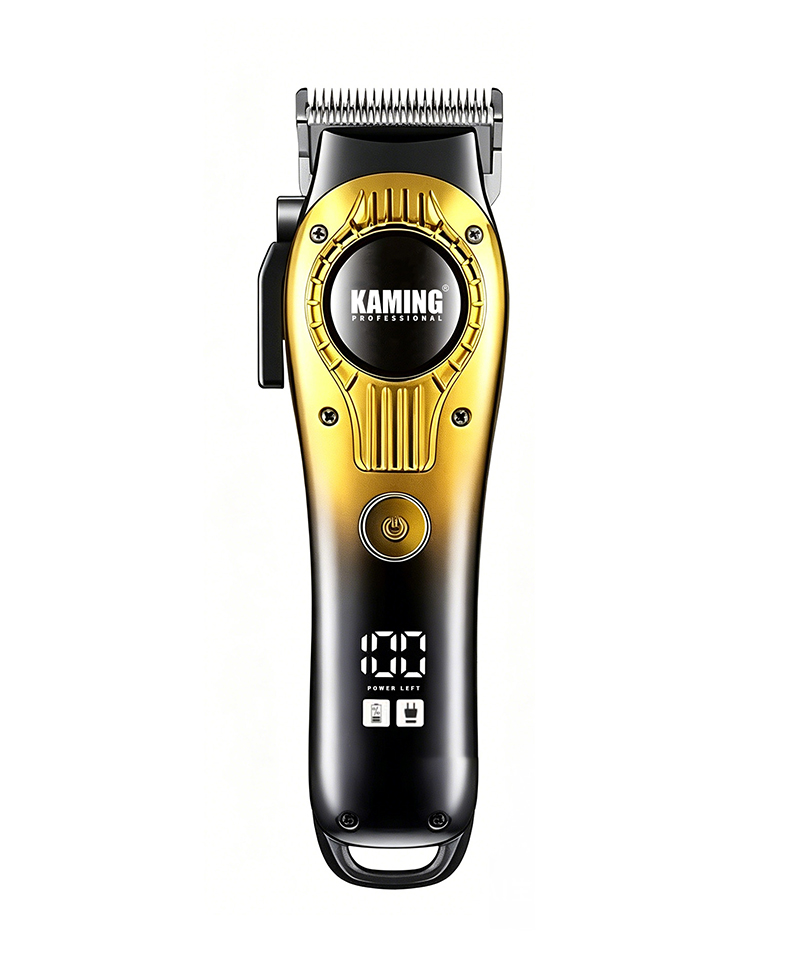 Quiet Fade Clipper with Digital Display and Stainless Steel BladesThis professional fade clipper delivers ultra-quiet cutting with a digital display for battery and charging status. The stainless steel blades and long-lasting lithium battery make daily salon fades faster and less tiring.View Product →
A taper is a subtler version of a fade. Hair length changes gradually around the ears and the back of the neck, while the top remains closer to a uniform length. A typical taper keeps a #3 or #4 on top and tapers to a #1 or #2 at the edges. The result is a clean, conservative shape that works well for daily wear in any workplace.
To keep the neckline and ear transitions clean without removing too much bulk, a taper clipper with a narrower blade profile is the easier tool.
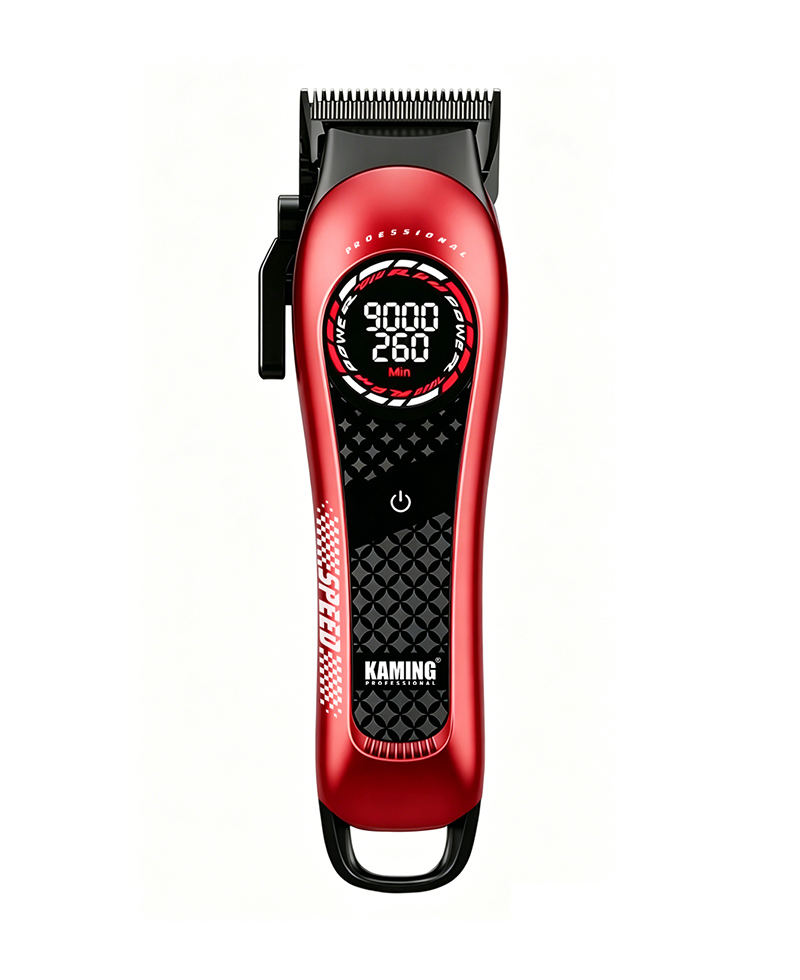 Taper Clipper with Powder Metallurgy Blade and Ceramic Moving BladeThis taper clipper features a wear-resistant powder metallurgy blade and black ceramic moving blade for durability. Its low-noise motor and battery display help barbers execute clean neckline and ear transitions with precision.View Product →
Fine or thinning hair looks best with shorter guards in the #2 to #4 range, because longer guards leave wispy ends. Thick and coarse hair can carry more weight; a #4 to #6 guard removes bulk while keeping enough hair for shape. Curly hair is unforgiving with very short guards, so use a #3 to #5 unless the client asks for a very close crop.
Half guards give you eight extra steps between the whole numbers. For a subtle change without jumping a full size, use a #1.5 instead of a #2, or a #2.5 instead of a #3.
When someone says "short sides," ask whether they mean a #1, a #2, or a #3. Show the guard and hold it against the skin. Many people do not know how much hair each number leaves, and a one-step difference represents 1/8 inch, a visible amount on most heads.
Not all guards fit all clippers. Guards are designed for a specific blade width and mounting mechanism, whether snap-on, click-on, or slide-on. A loose guard rattles during the cut and produces uneven length. When buying accessories, match the brand and model. When sourcing clippers for a salon, brand, or resale business, confirm that replacement guards are available before placing a bulk order.
Guards also wear over time. A broken tooth changes the cutting line, and a warped guard can catch the blade. If a guard no longer sits flush against the blade, replace it. Clean the guard teeth after every cut to remove hair, oil, and debris. The blade itself needs the same regular attention; the complete procedure is covered in our guide on how to use hair clippers, which also walks through hand position, combing patterns, and common beginner mistakes.
That is the whole system: #0 leaves almost nothing, #8 leaves one inch, and the numbers in between move in 1/8-inch steps. The taper lever adds finer control between steps, and half guards fill the remaining gaps. Whether you are cutting hair professionally or trimming at home, the same rule applies: decide where each length should go, pick the guard number that matches that length, and work from longest to shortest so you can fix mistakes as you go.
At home, a clipper with clearly marked guards and a reliable taper lever removes most of the guesswork from self-trimming and family haircuts.
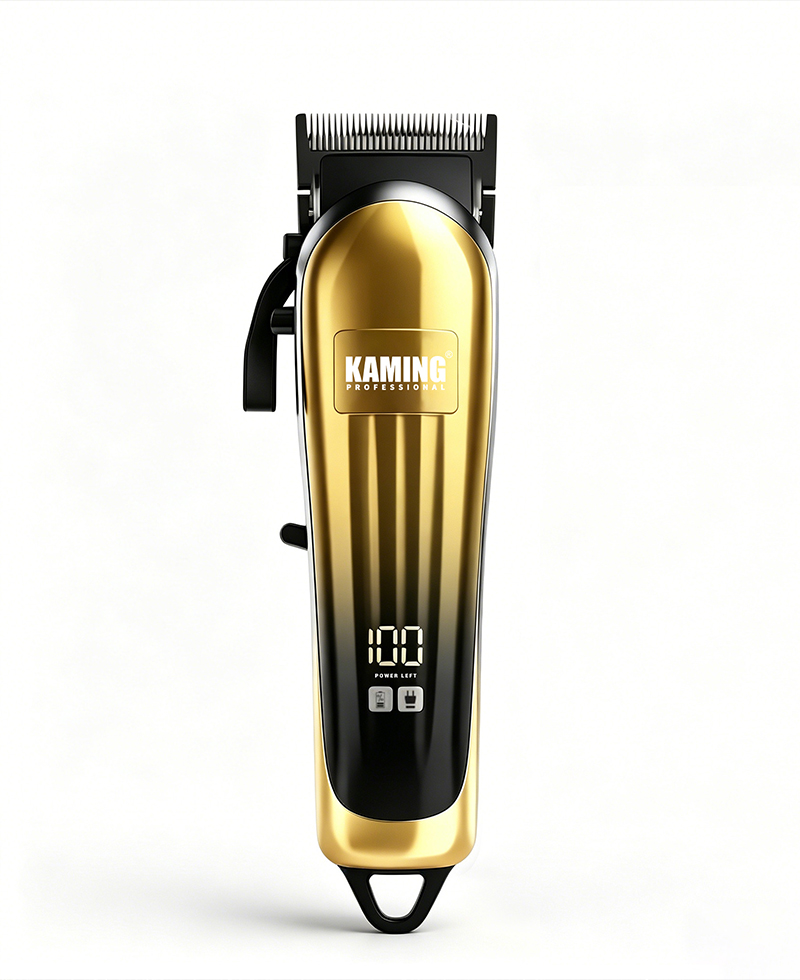 Home Taper Clipper with High-Carbon Steel Blades and LCD Battery DisplayThis home-use clipper combines a high-speed copper motor to prevent hair jamming, sharp high-carbon steel blades, and a toggle switch for easy operation. The LCD power display and standard guide combs support hassle-free self-trimming and family haircuts.View Product →
If you are sourcing clippers for a salon chain, a barbershop, or a retail line, we build clippers with clearly marked guard sets and offer OEM options; contact our team with your specifications.













 English
 中文简体
中文简体 русский
 Español
 Português
 عربى
عربى

